Looks like a great weekend for a walk or drive to the Canadian Museum of History to see the charming exhibition of impressionist paintings, River of Dreams.
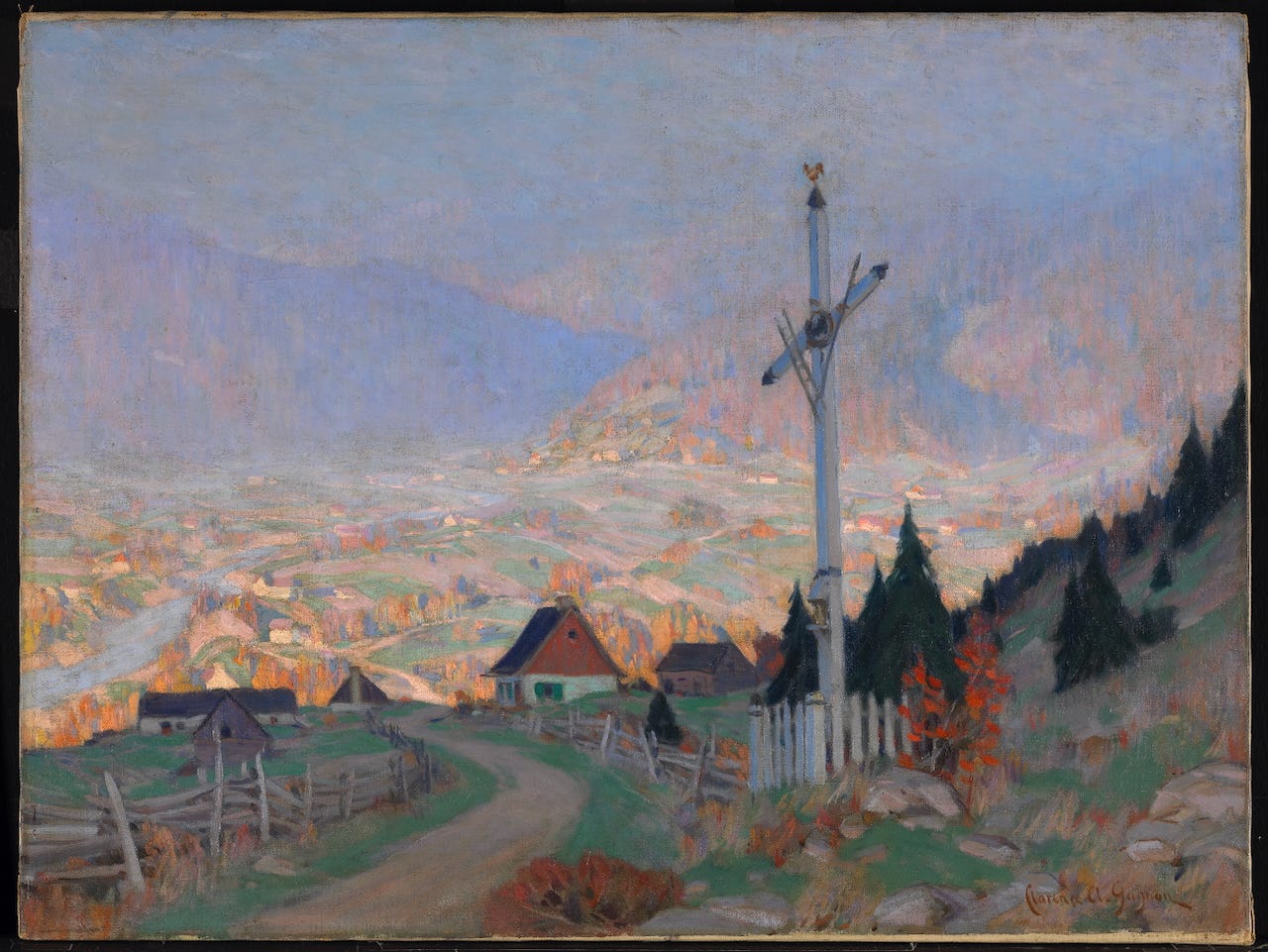
The river is the mighty St. Lawrence, and here it is seen through the work of artists such as Maurice Cullen, Ozias Leduc, Henrietta Mabel May, James Wilson Morrice, Marc-Aurèle de Foy Suzor-Coté and others.
The exhibition starts in Montreal and follows the river almost to its end. It’s an insightful way to appreciate impressionism, which in my perhaps impatient opinion has been somewhat overexposed in public exhibitions in recent decades. Following the river along its course, from downtown Montreal to north of Quebec City, gives the art a framework of historical and social reference. It reminds me of the National Gallery of Canada’s 2015 exhibition Monet: A Bridge to Modernity, which memorably offered what at first seemed a curious case of conceptualization. Both exhibition have the familiar seen in a new way.

River of Dreams begins with scenes of Montreal both industrial (Suzor-Coté’s Smog, Port of Montreal, 1914) and intimate (Cullen’s Winter Evening on Craig Street, 1912).
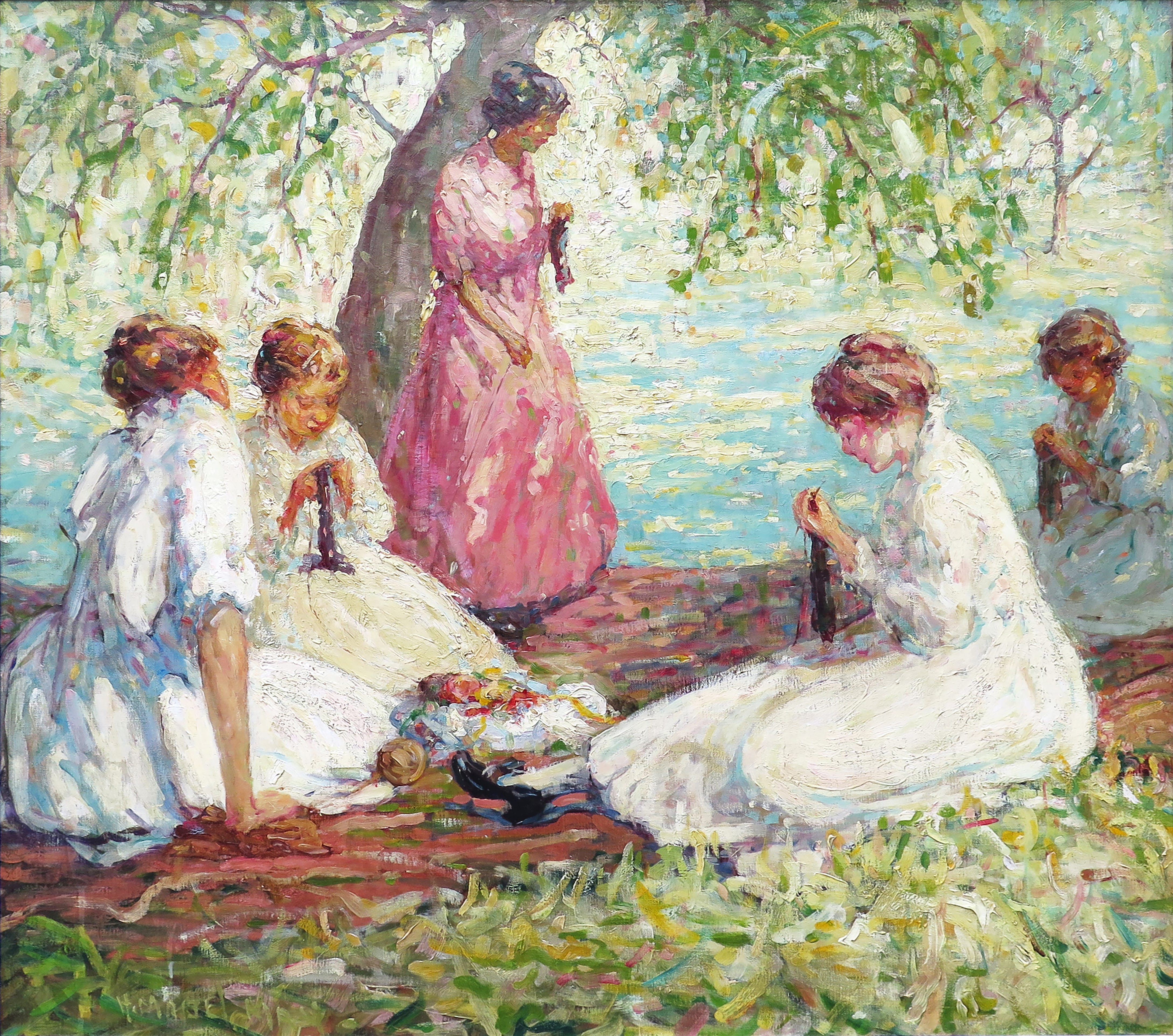
This is Canadian impressionism, but the foundation of European influence is seen, of course, and nowhere more noticeably than in May’s Knitting (1915), with five young ladies in white or pastel dresses crafting by what seems a bucolic bank on the vast river.
Other influences rise as well, and I see curiously many in the paintings of Ozias Leduc. The Hayfield (1901), brings to mind Constable, as does, later in the exhibition, William Brymner’s Haying Near Quebec, Beaupré (1907). Landscape at Dusk (1910) has the cinematic twilight of Caspar David Friedrich, and Open Window (around 1900) hints of a quiet interior by Vermeer, or by Vilhelm Hammershoi. I almost expect to see dust motes floating in the air, and I idly think of Hamlet’s dying words, “The rest is silence.”
The river tour moves northeast, with Suzor-Coté’s Northern Lights of the Arthabaska Hills (1923), and Morrice’s Ferry Boat at Quebec (around 1898). There are paintings of that ferry by various artists, and whatever wide appeal it had to them is the viewer’s to discern among a variety of styles and seasons to contrast and compare. You may realize that some affect you more than others, and the next viewer will have a different view. Such is one of the great thrills of art.
The tour ends with Brymner’s magnificent Early Moonrise in September (1899), with the fresh, bright moon peeking through large deciduous trees over a flock of contentedly grazing sheep. The precise location isn’t clear, but the scene is tranquil and pleasing. Nature and humanity seem in harmony. Such is not always the way, and in this moment it is precious.
River of Dreams continues to Aug. 30, 2026. Click here for more from the museum.
-30-