The Canadian Museum of History’s exhibition on popular music from decades ago is nearing its end — or to put it another way, this blast from the past won’t last.
The exhibition, Retro — Popular Music in Canada from the ’60s, ’70s and ’80s, closes Jan. 18. I visited with a friend recently and felt “the rush of nostalgia” promised by exhibition notes. I saw the identical model of a stereo that I blared in my teenage bedroom, instruments played by (and made for) some of Canada’s most internationally known musicians, and a lot of other sights, sounds, photographs, gear, merch and more.
Here are a few of my favourite things from the show . . .
The sentimental stereo: There’s plenty of cool technology here, from shoulder-straining boom boxes to the Electrohome Circa 711 “Stereo Sound System,” with its “futuristic design (that) echoed public interest in space exploration during the 1960s and ’70s.”
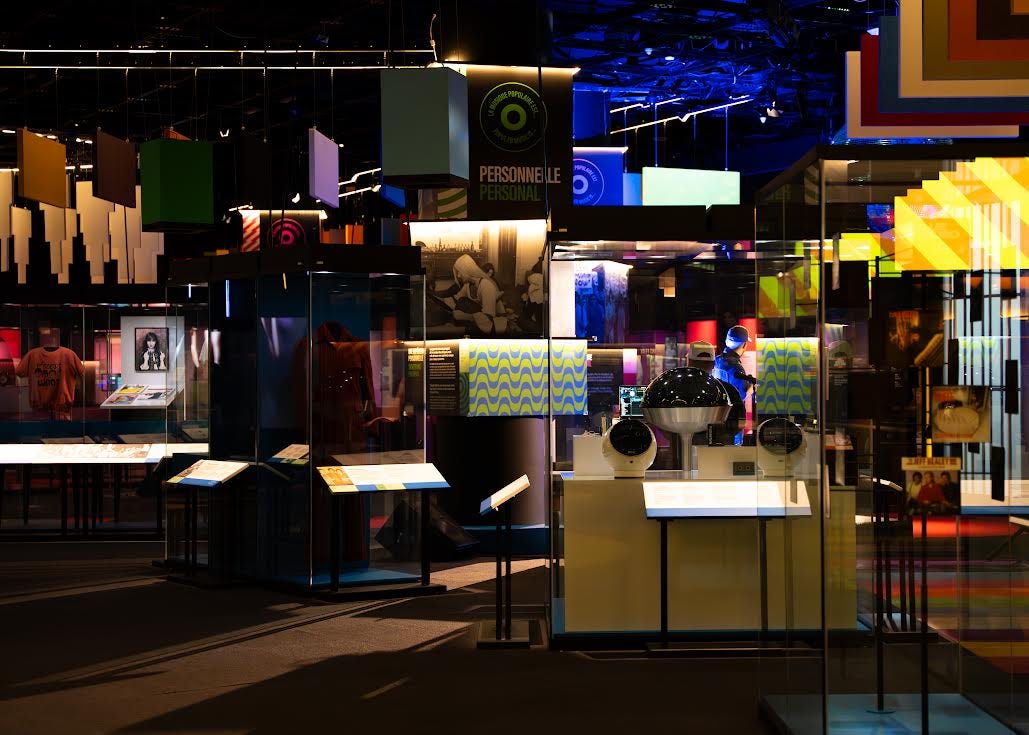
You’ve probably seen this model of stereo in a vintage shop, with its brushed aluminum base and graceful neck leading up to a round platform for the turntable, all of it covered by a smoked black dome of plexiglass. Two little round speakers sit next to this mother ship of sound. The system was designed by Gordon Duern and Keith McQuarrie, according to the website of the Royal Ontario Museum, which has the same system in its personal collection.
Oh, what memories I have of blaring Dance the Night Away (from Van Halen II) and Blitzkrieg Bop (from Ramones) in my bedroom at our cottage. “Pete,” my dad would suggest, “you could probably turn that down a bit.” I would just roll my eyes, because I was 15 and smarter than everyone.
The fantastic/absurd guitar: When I saw Geddy Lee’s doubleneck electric guitar/bass I couldn’t decide if it was best left in the 1970s, when this Rickenbacker 4080 was made. It does seem a bit Spinal Tap. Regardless, the young Geddy was infatuated with Rickenbackers but “could only dream of one day owning one,” he says in his own compendium, Geddy Lee’s Big Beautiful Book of Bass.
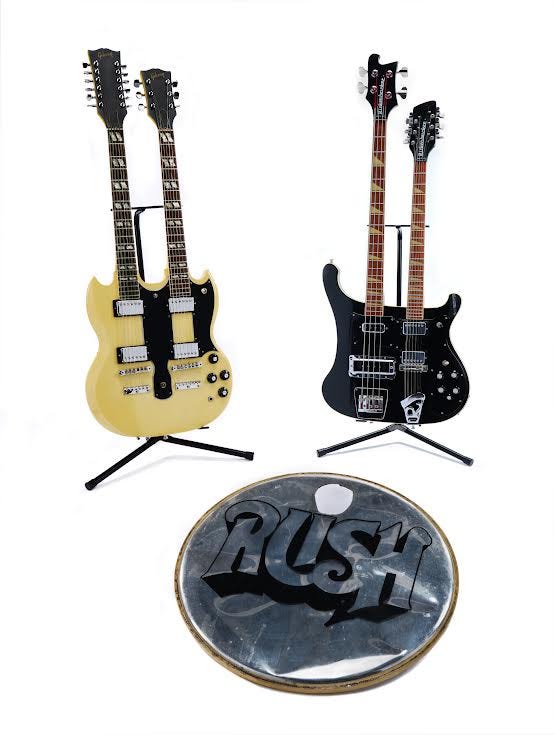
Not long after Rush signed its first record deal in 1974 he custom ordered his first mammoth axe. This black model (perhaps the same black example among several doublenecks featured in his book) was played on much of Rush’s music in the late 1970s, including the fan-favourite Xanadu. Neatly, Rush guitarist Alex Lifeson’s doubleneck Gibson guitar, also played on Xanadu, hangs next to Lee’s Rickenbacker. That’s a lot of necks.
Not that Habs’ jersey: Many costumes are featured in the exhibition, from Anne Murray’s hand-beaded jogging suit, to Mitsou’s black leather “Bye by mon cowboy” outfit, to Céline Dion’s Eurovision dress (with a waist thinner than your neck), to the borrowed wedding dress that k.d. lang wore to accept her first Juno award in 1985.
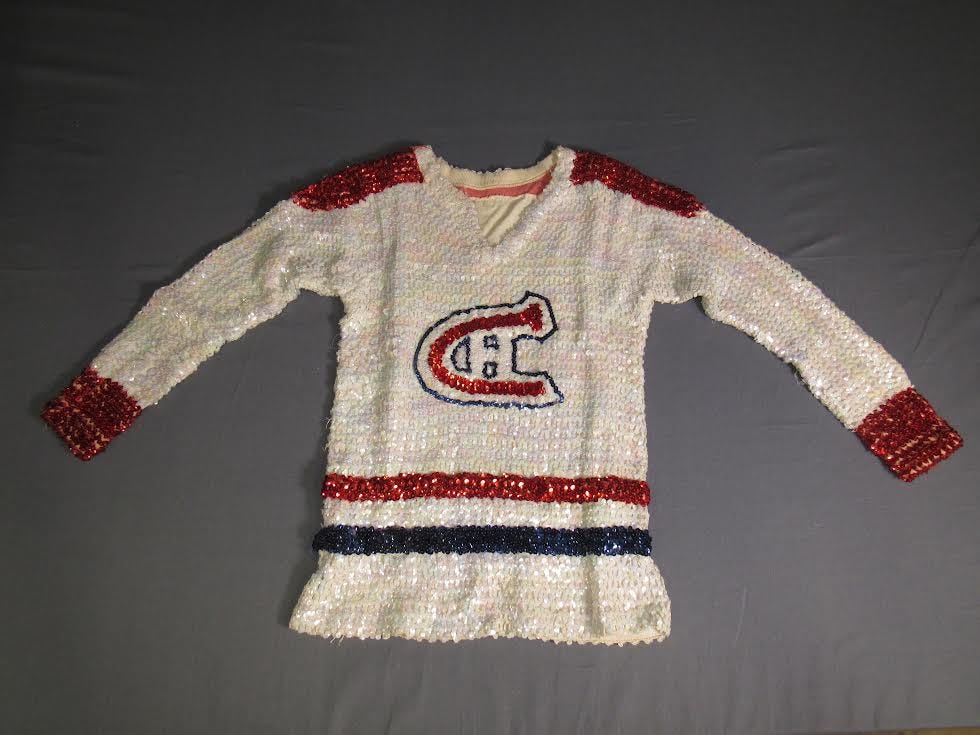
Speaking of the Junos, at one point while strolling through the displays I thought I saw in the distance that glittery little Montreal Canadiens’ get-up that Shania Twain wore while hosting the Juno Awards in Ottawa in 2003. (If you know the get-up I’m talking about, you know the get-up I’m talking about. Ahem.) I made a beeline to the case in which this particular Habs’ jersey was held and there I discovered, to my considerable dismay, that it was not Twain’s get-up. It was another sequinned Habs’ jersey that had been worn by singer Robert Charlebois in the 1960s.
Once I recovered from my shock, I could admire Charlebois’s jersey as another brilliant homage to his home team.
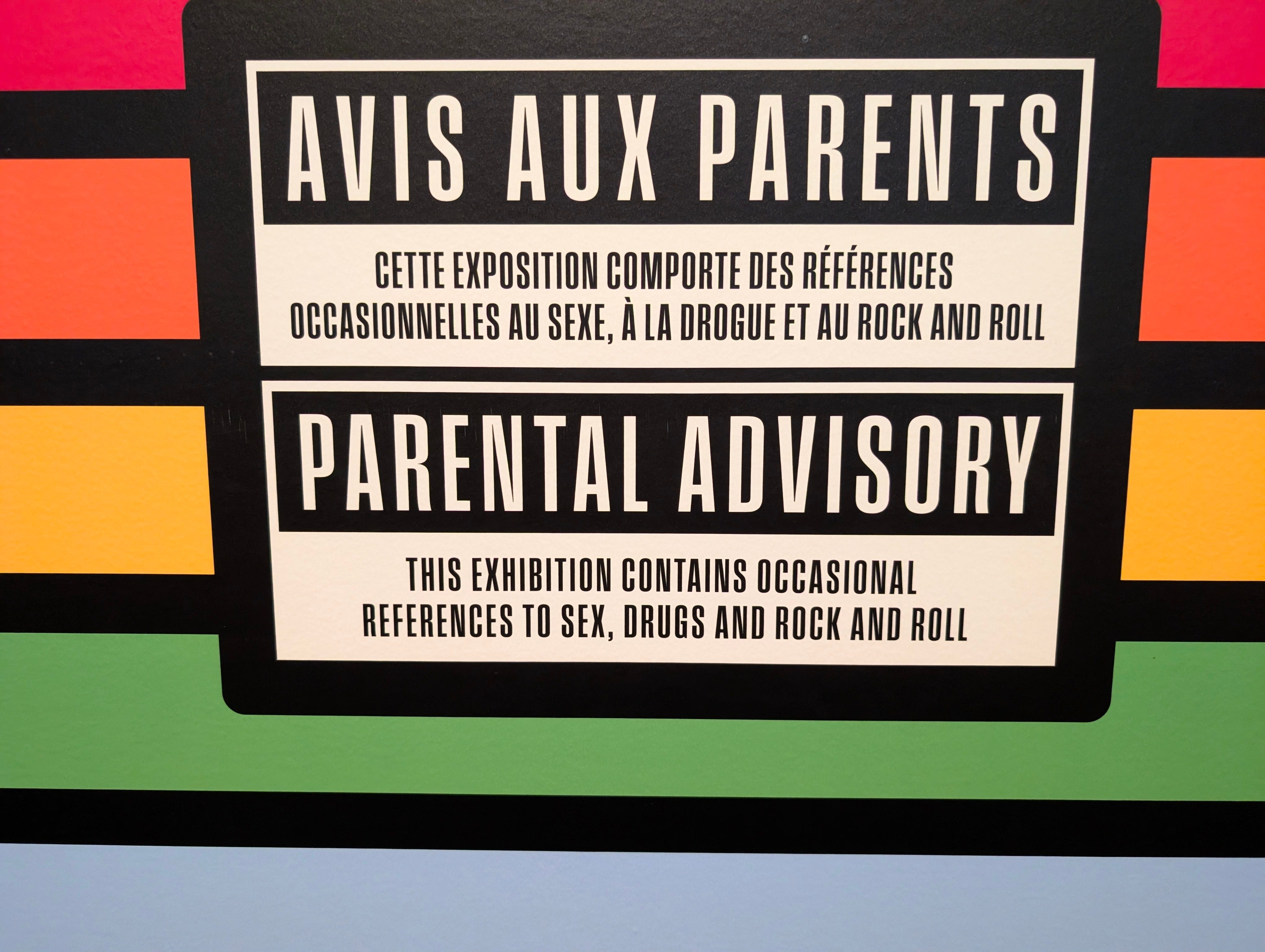
Retro closes Jan. 18 and it really is a lot of fun. Below is the cheeky warning sign displayed outside the space. See more on the museum’s page by clicking here.
-30-