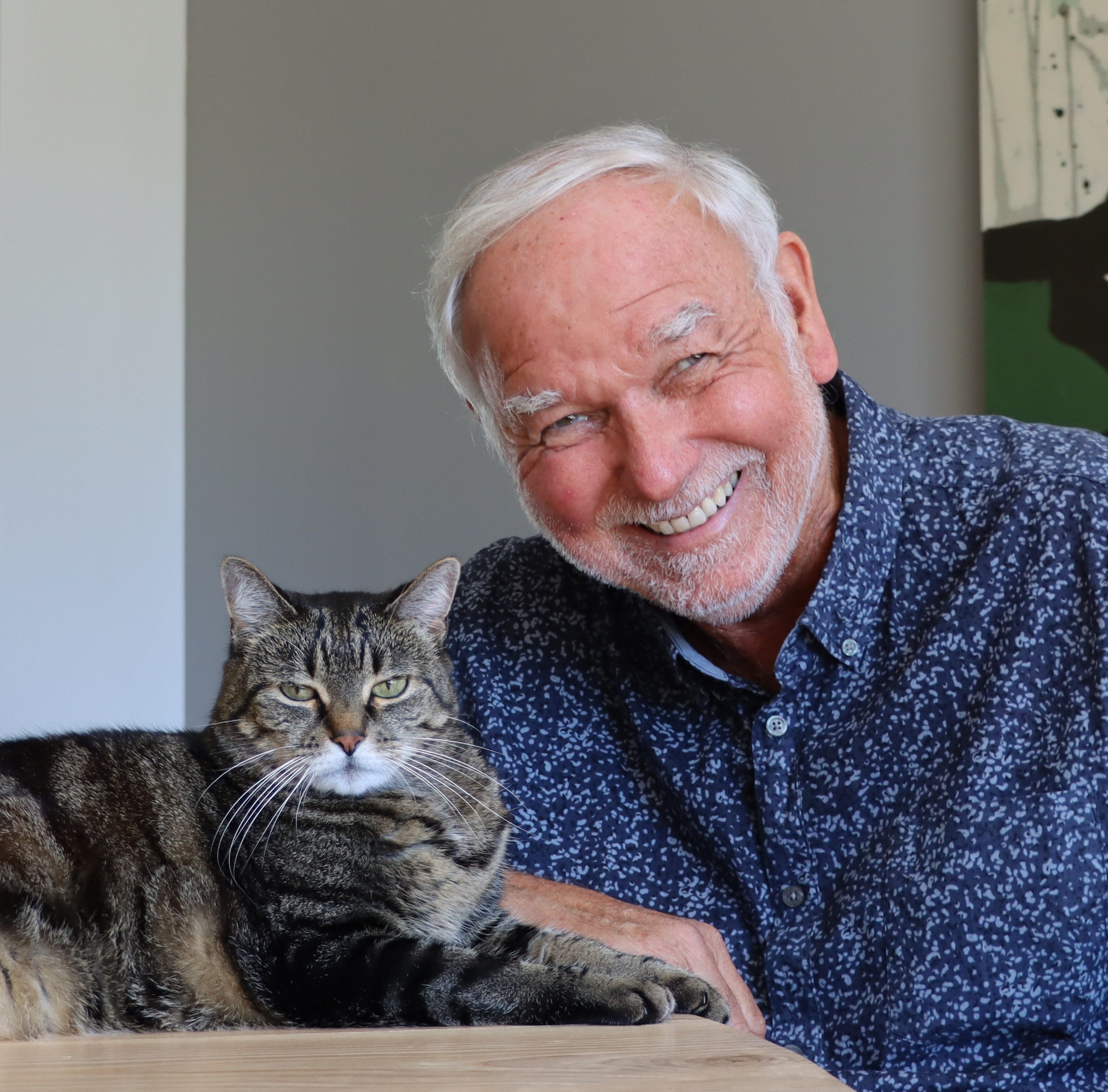
This week on 1 Question With … we have Rod Phillips, who is described in his bio on the Carleton University website as “Professor — History of the family, alcohol, food, France (18th-century and Revolution), cats.”
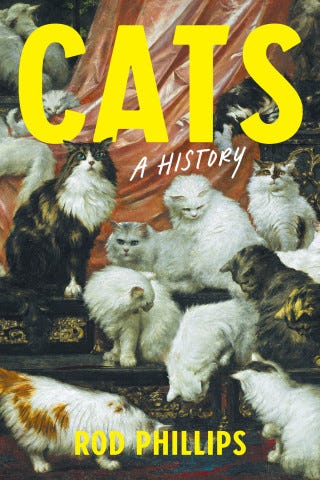
Phillips has written widely on these subjects, including 15 years as resident wine expert with The Ottawa Citizen. His latest book is titled Cats: A History. These subjects are not so disparate as they may seem.
“The ways people have historically treated cats, like the way they’ve treated alcohol, provide windows into broader trends in society and culture,” he says on the university website.
Our 1 Question for Phillips is, “Did we domesticate cats or did cats domesticate us?”
(His response has been edited for length and clarity.)
Phillips: Well, it’s an interesting question, and it sort of rests on a couple of interesting assumptions. It’s not a question we would ask about dogs, we just assume that we domesticated dogs. To ask whether cats are domesticated suggests that we think that cats might be smarter than dogs.
The second thing is there’s a whole question of domestication, which we often tend to think of as just a one-way process where humans domesticate animals. People who work in domestication would now argue that it’s a kind of a reciprocal, not necessarily equal, process.
When it comes to cats, I would say they were receptive to moving in around humans, and they did that probably 12,000 years ago when wildcats began to come near human settlements because humans had begun to practice agriculture.
Humans began to grow grain and keep grain in storage pits, and then the storage attracted rodents and the wildcats came to feed on the rodents, which were easier to catch than those in the wild. Cats found an advantage in being around people, and people found an advantage in having cats around because they protected food supplies from rodents.
It’s a kind of reciprocal process, advantageous to cats and and to humans, and it really evolved on that basis for thousands of years. Cats became intrinsic to the whole process of agriculture, so as agriculture spread from the Middle East people took cats with them to protect their grain stores.
So, the interesting thing is the wildcat that’s indigenous to the Middle East is actually the origin of cats. That’s what all cats come from. When you look at the DNA of cats in the house, it doesn’t matter whether they’re tabbies or angoras or Siamese or anything like that. These cats, anywhere in the world, have almost exactly the same DNA as the wildcat that’s indigenous to the Middle East.
Did they domesticate us? Did we domesticate them? Well, humans were happy to have cats and cats were happy to be around humans, and that’s the basis that we’ve built the relationship on.
Dogs probably chose to be around humans because there were advantages to being fed and to being looked after, and then people began to breed dogs for particular purposes. People never bred cats for particular purposes, like hunting and herding and guarding the way they did with dogs. I think both with cats and dogs you would say both chose to spend time around humans because they got benefits from it.
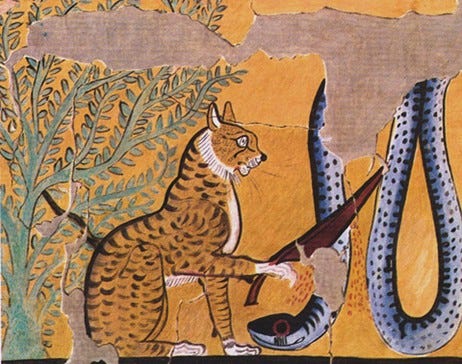
What’s changed with cats? Well, cats have been in and out of people’s houses for thousands of years. They just came in to feed on rodents and then they would go outside, so people didn’t really see cats as pets. They didn’t have names for them, as far as we know, they didn’t feed them.
There’s a sort of a point in the late 19th century when all of a sudden there’s a line of thinking that cats had been maligned, that they have been treated badly. In many respects, this just sort of pops up in the late 1800s. At the same time, there is a rise of a really negative attitude towards cats, in which people call for the extermination of all cats.
Cats have had a very tumultuous, often a very hostile relationship on the part of humans. We’ve regarded cats as evil, as companions of the devil, companions of witches.
We still find this today. Something like a third of people say they do not like cats, and people are quite happy to say they hate cats, whereas I think few people would be happy to say they hate dogs.
Yet, in the late 1800s there’s a critical mass of people who begin to regard cats in a very positive way. And then, for some reason after the Second World War — it may have to do with more prosperity in the growing middle classes — pet-keeping seems to have taken off.
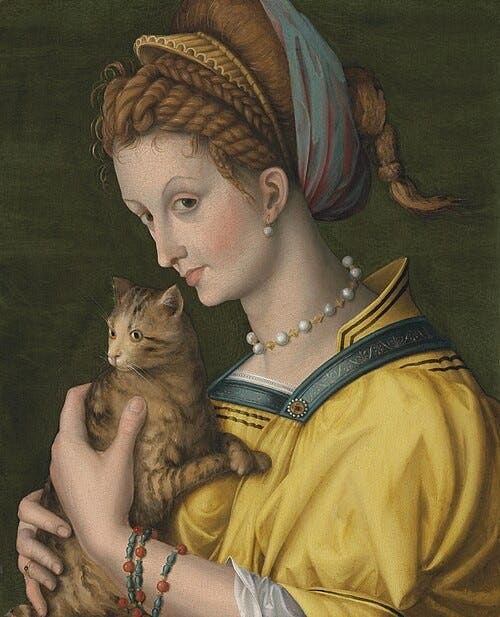
You can see all kinds of evidence of pet-keeping that you didn’t see before. Veterinarians, for example, now their main clients are cats and dogs, but before that it was livestock.
From the 1950s and1960s, you see an explosion of publishing books on cats, how to look after your cat and that kind of thing, which you didn’t see before. You start to see cats more in popular culture — cartoons, movies, Tom and Jerry, Felix, Sylvester the cat.
We really don’t know how many houses had cats, or how many people had pet cats. We don’t know how many cats there were because there’s no census of cats.
My best guess is that into the last 20 years or so, probably around a quarter to a third of households in places like Canada, United States, Europe, New Zealand, Australia and so on have a pet cat.
Since the last 100 years or less, people have come around to the view that cats are actually very nice animals to spend time with.
-30-
Cats: A History, by Rod Phillips, is now available online and in bookstores.